
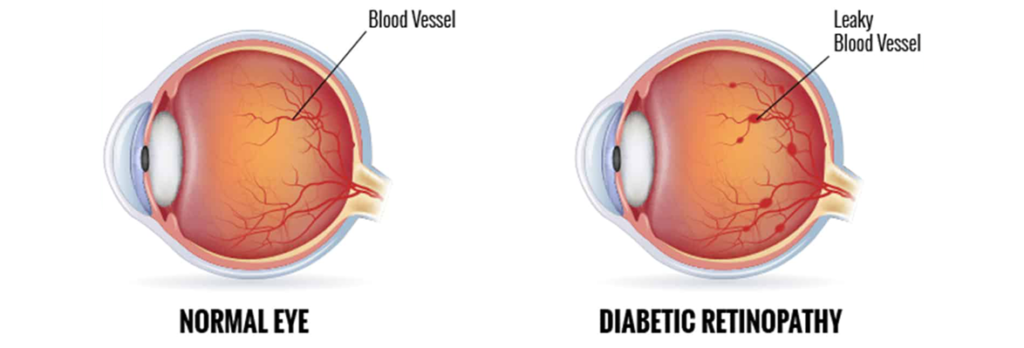
What Is Diabetic Retinopathy?
Diabetic retinopathy is an eye problem that can lead to vision loss and even blindness. It affects people with diabetes. It is most common in people who do not control their blood sugar well. Damage is caused to the fine blood vessels in the retina. These blood vessels may bleed or leak, and sometimes even abnormal new blood vessels may form. In severe cases the blood vessels and surrounding tissue may contract and cause the retina to detach (pull away from the back of the eye).
Most people with diabetic retinopathy have no symptoms until the disease is very advanced. By then, it is usually too late to do anything about the vision loss and the vision loss is permanent. That’s why it is important to get screened for the condition early. That way, we can take steps to protect your eyes before your vision is damaged.
When symptoms start, they can include:
- Blurry vision
- Dark or floating spots
- Trouble seeing things that are at the center of your focus when reading or driving
- Trouble telling colors apart
What tests will be done during the consultation?
To check for diabetic retinopathy you can contact our practice to arrange an appointment. During the consultation we will test your vision and take your eye pressures. Our technician will do an OCT (retinal imaging to take pictures of your retina) to document and evaluate the extent of your diabetic retinopathy. Dr Conradie will then examine your eyes at a slitlamp (a special microscope to see the structures of the eye).
Sometimes we may need to put some eye drops in your eyes to make your pupils open up. We call this a dilated eye exam. The drops takes about 40 minutes to take effect, after which the doctor looks at the back part of your eye, called the retina. That’s the part of the eye that contains the blood vessels that are damaged by diabetic retinopathy. These drops may cause blurry vision for the rest of the day, so it is important to bring someone with you to drive you back home after the consultation.
If any problems are picked up during the examination, Dr Conradie will discuss with you the most suitable treatment options for your condition.
Treatment options
How Is It Treated
Treatment is based on the severity of the retinopathy. If the damage is mild it is not always treated and just observed. It is then very important to keep your blood sugar and blood pressure under control, and to stop smoking. This helps to prevent the condition from getting worse. If the damage is moderate to severe, some of the treatment options may include:
1) Laser treatment (retinal photocoagulation): this is done in the doctors rooms, and involves applying laser to the problematic blood vessels on the retina. This is not to improve your vision, but rather to stop the damage from going further.
2) Injections (intravitreal anti-VEGF eg. Avastin / Lucentis): This is usually done if there is macular oedema present (swelling in the back of the eye). This is a special type of medication that is injected into the eye and aims to decrease the swelling and limit new blood vessels from growing.
3) Surgery (vitrectomy): this is an operation that is done when the damaged blood vessels causes bleeding into the cavity of the eye (the vitreous) or when there is a retinal detachment.
How often should you visit your eye doctor?
It is recommended that people diagnosed with diabetes should visit their eye specialist their eye specialist every 6 months to a year. If any problems are detected you may be asked to come back at more regular intervals depending on the severity of the condition.